








The latest State of Digital report by the Digital Marketing Association of the Philippines is not trying to impress with novelty. It does something more uncomfortable and more useful. It forces brands and marketers to confront a reality many still refuse to fully accept: digital in the Philippines is no longer a space you enter. It is an environment you operate within.
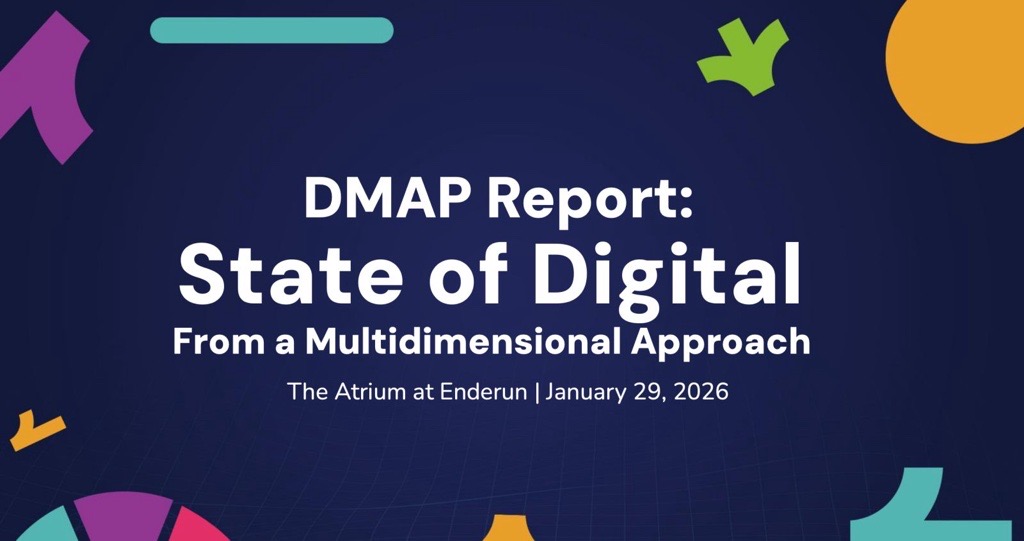
Presented in January 2026, the report abandons the familiar hype-driven language of platforms and pivots instead to a multidimensional reading of behavior, geography, age, and systems. That choice alone is a brand statement. DMAP is positioning itself not as a cheerleader of digital acceleration, but as a translator of complexity.
And complexity is exactly what the Philippine digital landscape has become.
The first signal is structural. Over 60 percent of the country’s digital universe is concentrated in the so-called Big Three regions: NCR, CALABARZON, and Central Luzon. This is not just a media planning insight. It is a warning about uneven digital power. Brands chasing national relevance while planning uniform digital strategies are misreading how influence, access, and attention are actually distributed.
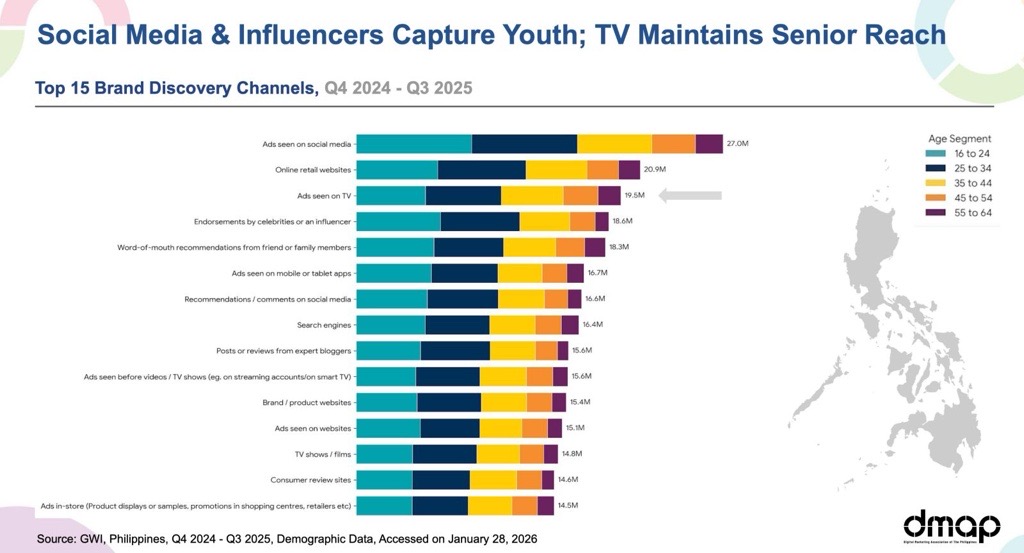
More striking is how discovery itself has fractured. Yes, two-thirds of top brand discovery channels are digital. But nondigital formats like billboards, radio, and cinema remain disproportionately strong when measured by affinity and impact. Among Gen Z, billboards and word of mouth are resurging. Among older cohorts, search, podcasts, and even mobile gaming now play discovery roles that traditional frameworks never anticipated.
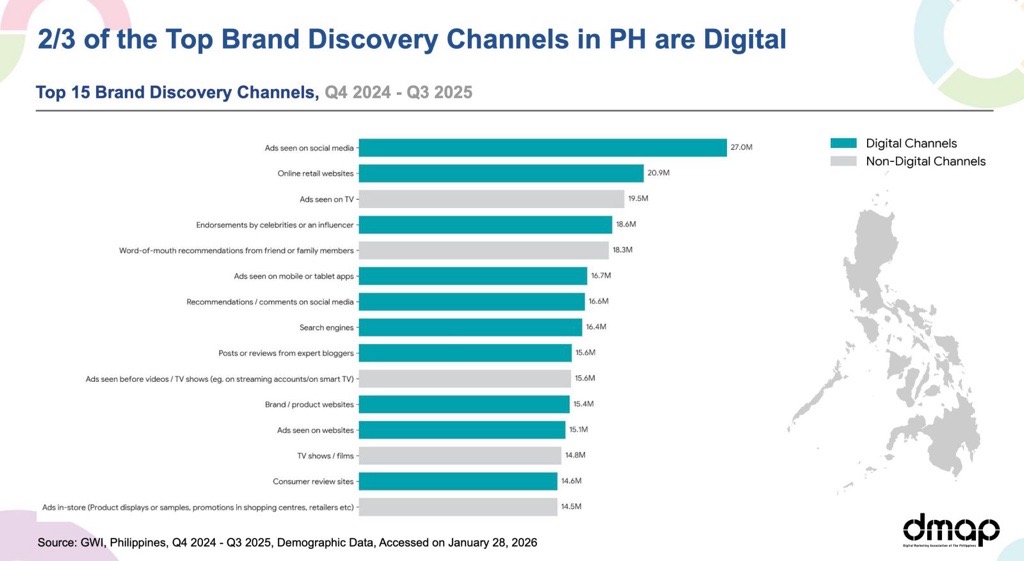
The implication is clear. The old funnel is gone. Awareness no longer flows neatly from mass to niche, from broadcast to click. Discovery is now ambient. It happens everywhere, unevenly, and often unintentionally.
This is where the report quietly challenges many brands. Omnichannel is no longer a strategy. It is a baseline expectation. If your brand presence collapses when a consumer moves from TikTok to search or from social to physical space, then you do not have a digital strategy. You have a set of disconnected tactics.
The section on platforms reinforces this. TikTok’s audience is massive, young, and highly concentrated in Metro Manila. Facebook remains dominant in scale and ad infrastructure, especially among inbound travelers who can multiply reach by more than tenfold in key cities. Google continues to be the backbone of intent, with around 80 million signed-in users nationwide.
None of this is surprising in isolation. What matters is the interaction. Brands that treat platforms as competitors rather than complementary systems are designing fragmentation into their own strategies.
Then comes the most consequential part of the report: AI.
ChatGPT’s Philippine reach nearing ten million users is notable. But the more important insight is who is adopting it. Growth is strongest among mature users, not digital natives. This flips the lazy narrative that AI is a Gen Z toy. In reality, AI is becoming a productivity layer for decision makers, professionals, and managers who already shape organizational choices.
The report’s finding that AI outputs vary dramatically depending on source optimization should unsettle every brand leader. If AI increasingly mediates how consumers ask questions, compare brands, and form judgments, then visibility is no longer just about SEO or PR. It is about being legible to machines.
This is a reputational issue disguised as a tech trend.
Brands that fail to structure their information, clarify their authority, and anchor their narratives in credible sources risk becoming invisible in AI-mediated environments. Not cancelled. Not criticized. Simply absent.
The final section, on new teams in the arena, brings the picture together. Digital marketers are no longer specialists. They are system managers. They balance ads, e-commerce, remote work, analytics, and multiple platforms simultaneously. Older marketers are catching up fast, not by mimicking youth culture, but by adapting tools to experience.
The challenge is not talent scarcity alone. It is organizational inertia. Legacy structures, misaligned KPIs, budget constraints, and weak senior buy-in continue to limit what teams can actually execute.
Which brings us back to the brand behind the report.
DMAP is not selling certainty. It is selling orientation. In a landscape where everything is measurable but little is predictable, that may be the most credible position a trade organization can take.
Brand Verdict
DMAP succeeds by refusing to simplify what is no longer simple. The report positions the organization as a systems thinker rather than a platform advocate. Its strength lies not in forecasting winners but in mapping tensions brands must learn to navigate.
Brand Review Verdict
This is not a report for those looking for quick media hacks or trend lists. It is for leaders who understand that digital has matured into infrastructure. Brands that read this as operational intelligence rather than marketing trivia will be better equipped for 2026. Those who ignore it will continue to optimize channels while losing relevance in the system that now defines them.