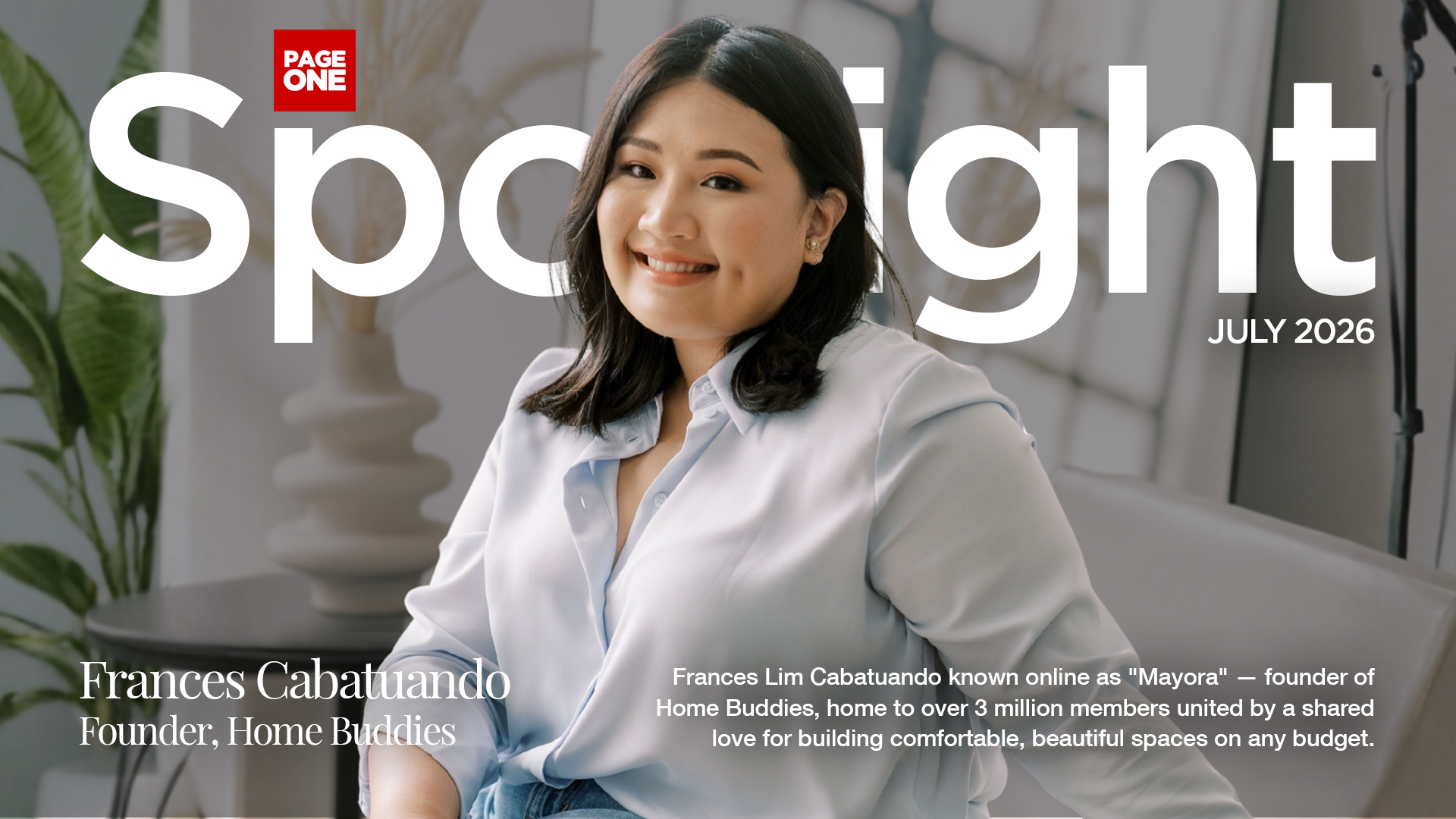


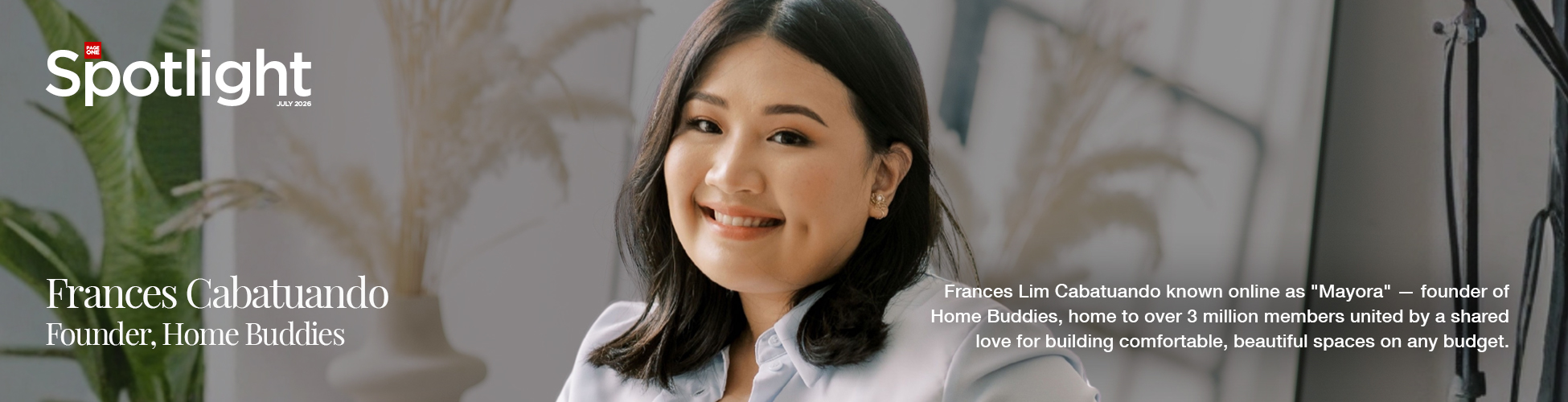

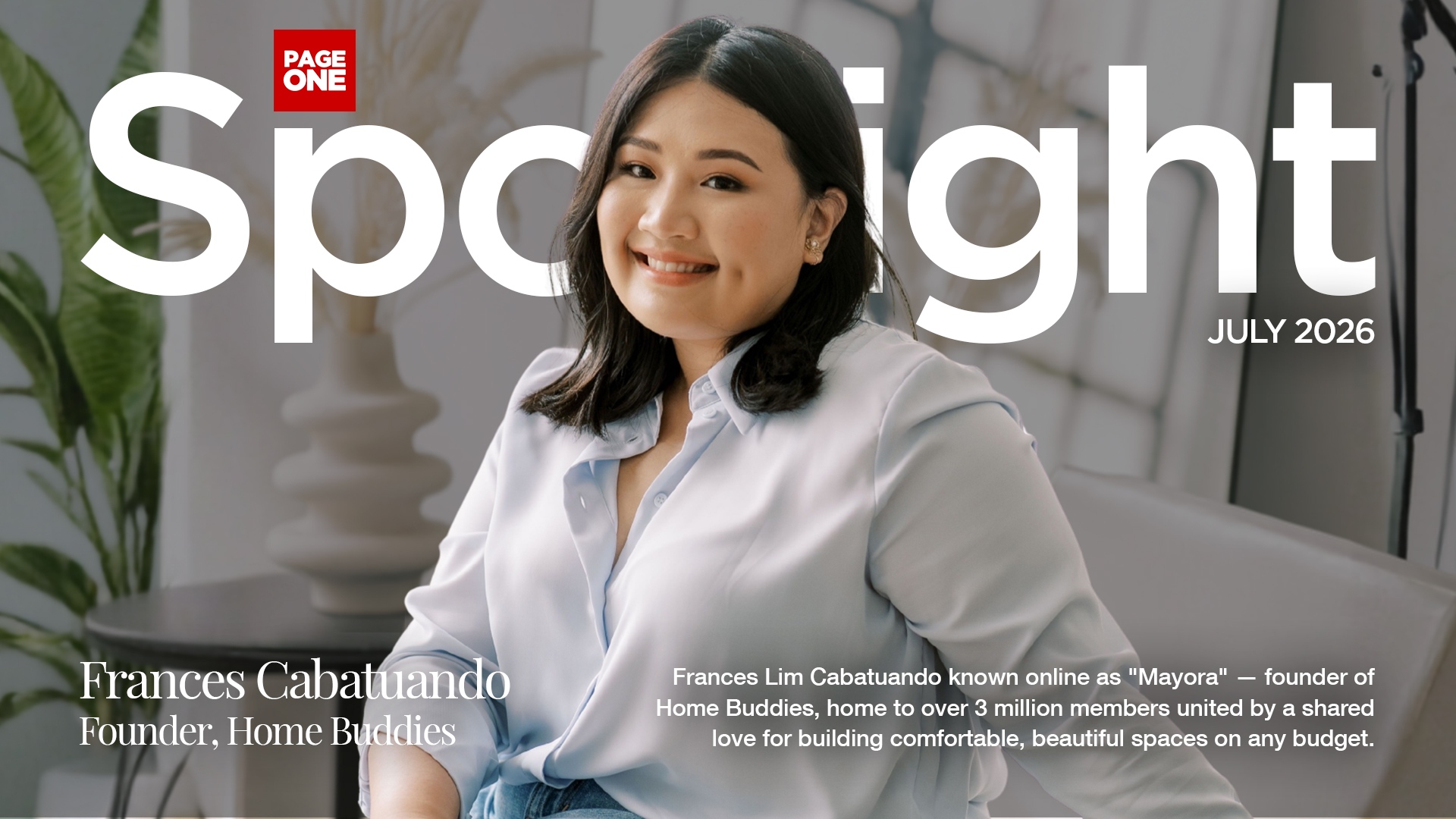





When Frances Cabatuando created Home Buddies in September 2020, she was not setting out to build one of the country’s largest online communities. She was simply looking for a space where people who enjoyed home improvement could exchange ideas, ask questions, and learn from one another.
She could not find one.
So she built it herself.
Today, Home Buddies has grown into a community of more than 3.2 million members. Its language is distinctly Filipino. Members call each other kapitbahays. Moderators are tanods. Frances herself became known as the “Mayora,” a title that came from the community rather than from her own design.
But before Home Buddies became a household name, Frances had already experienced the uncertainty of starting over.
She had launched businesses that failed to gain the momentum she had hoped for. Yet those experiences did not stop her from trying again. This time, however, she was not chasing the next big business idea.
“I created Home Buddies not thinking it would be the next big thing,” she recalled. “I just know that I was very much into home improvement, and when I went on Facebook to look for a group where I can find like-minded home enthusiasts, there was none.”
She found communities dedicated to plants, coffee, cars, and parenting. But for home design, do-it-yourself projects, and improving living spaces, she found nothing.
“I’m a strong believer of ‘if you can’t find it, then you have to build it’ because there’s probably other people looking for it, too,” she said. “And true enough, Home Buddies filled a gap.”
Long before the Facebook group existed, Frances had already been documenting her own condominium improvement journey through an Instagram account called Nobi Home. It was personal at first, sharing ideas, purchases, and do-it-yourself projects that reflected her own interests.
That changed during the pandemic.
As lockdowns stretched longer than many expected, more people found themselves spending nearly all their time at home. Followers began asking where she bought furniture, how she completed her DIY projects, and how they could improve their own living spaces.
“I remember around July, after the announcement of an extended ECQ, that’s when I got more followers,” she said. “People started asking about where I bought my things, how I did my DIYs.”
For Frances, the sudden interest reflected a larger shift happening across the country.
“It wasn’t just three months of staying in anymore. People had to change how they lived and worked and moved at home,” she said. “Seeing how I was sharing my home inspired others to also start improving theirs too.”
What started as one person’s home gradually became a conversation about everyone else’s. That sense of belonging eventually became one of Home Buddies’ defining characteristics. Frances intentionally chose to call members kapitbahays because she wanted the group to feel less like another anonymous online forum and more like an actual neighborhood.
“I didn’t want to just create a Facebook group,” she said. “I didn’t want it to just be digital. I wanted to connect with real people, and talk about real homes.”
Calling members kapitbahays was a conscious decision.
“I wanted them to feel that this group is different. We’re not anonymous here, we’re real people giving real advice,” she explained.
She also hoped that making interactions feel more personal would naturally discourage spam and online hostility.
“I had hoped that adding this personal touch would also prevent spammers and trashtalkers. You know the internet,” she said. “That set the tone for Home Buddies, making it the safe space Filipinos turned to during the pandemic, and until now.
In an online culture that rewards distance, snark, and anonymity, Frances built Home Buddies on the opposite premise: that people behave better when they’re seen as people. It’s a simple insight, almost obvious in hindsight, but it’s rarely acted on because it requires more work than hiding behind a username ever does. The fact that this approach held up not just as a nice idea but as a functioning deterrent against spam and hostility says less about clever moderation tactics and more about a basic truth many platforms ignore.
Interestingly, the title “Mayora” was never part of the original plan.
“The Mayora story is different,” she said. “They coined that for me.”
The timing of Home Buddies’ launch also became part of its story.
Founded at the height of nationwide lockdowns, the community quickly became a place where Filipinos exchanged recommendations on furniture, appliances, home organization, and practical solutions for everyday living.
Still, Frances believes Home Buddies would have found its audience even outside the pandemic.
“I think it still would have worked but maybe not mainstream success,” she said with a laugh.
Even as life gradually returned to normal, she observed that people’s concerns simply evolved with the seasons.
“We’re no longer stuck at home, but every year, we get intense summer heat so people would still ask for aircon recos. During rainy season, we still expect people to ask about dryers and dehumidifiers,” she said.
“One way or another, I think people would have discovered Home Buddies because of their concerns at home.”
While Home Buddies feels warm and spontaneous, much of its identity was shaped by Frances’ years working as a creative director in advertising.
She credits that background for teaching her that branding goes far beyond logos and visual identity.
Frances credits much of Home Buddies’ distinct identity to her years in advertising, where she learned that branding goes beyond logos, colors, or visual templates. It is about creating a voice, a personality, and a sense of belonging that people instantly recognize. She said she finds it especially rewarding whenever people describe Home Buddies as different from other Facebook groups because it manages to feel organized and thoughtfully built while remaining approachable and relatable to ordinary Filipinos. That balance, she explained, was intentional. Rather than creating a community that felt overtly branded or corporate, she focused on shaping one with a clear identity that felt authentic, familiar, and welcoming.
More importantly, every decision had a purpose.
“It’s not just about creating a name, a logo and a set of templates,” Frances explained. “It’s creating a voice that’s uniquely Home Buddie and uniquely Mayora.”
She added that every initiative began with a single question.
“At the very core of it, whatever I did always had to answer, ‘What problem am I solving?’ Every detail had to have a meaning. Every program, every post, every word had to be deliberate because there is a very specific community in my mind that I wanted to build.”
That philosophy helps explain why Home Buddies became more than a Facebook group.
It started with one person looking for people who shared the same interest. Along the way, it became a community where millions of Filipinos found not only ideas for their homes, but also a neighborhood they could belong to, even if it existed entirely online.
And in the end, that may be the real blueprint behind Home Buddies: not a group that simply talked about homes, but one that, in its own way, became one. Because long after the paint colors have been chosen and the furniture finally arranged, what stays is the same thing that made people log in and ask, share, and help a stranger in the first place — the quiet, deliberate sense that somewhere in that feed, they were not alone in wanting to build a place to call their own.