



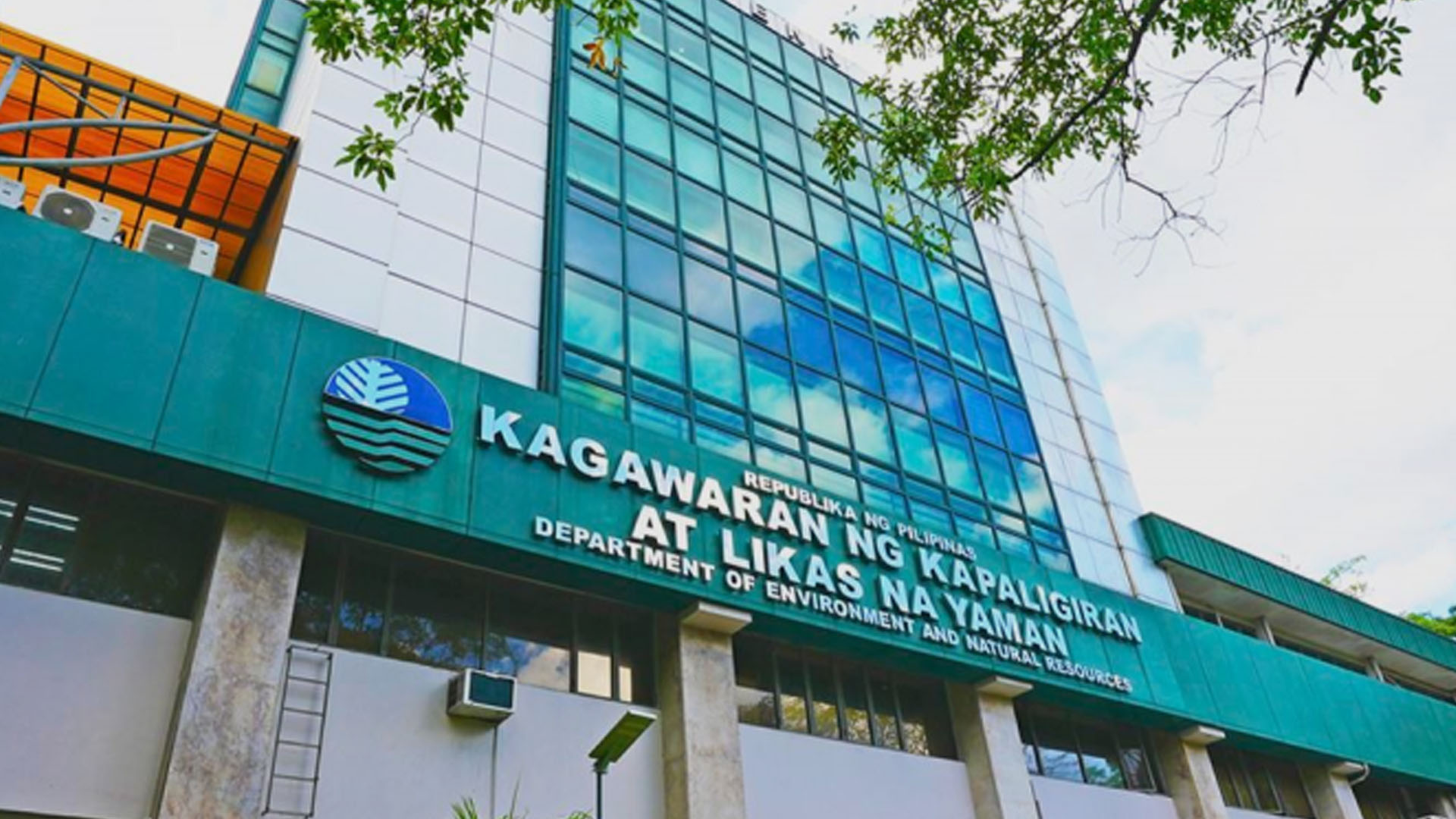







The Department of Environment and Natural Resources (DENR) reported major gains in forest restoration, water management, and environmental governance in 2025, as the Philippines faced increasingly extreme and unpredictable weather conditions.
Secretary Raphael Lotilla said DENR’s initiatives are in line with President Ferdinand R. Marcos Jr.’s directive to boost climate resilience to help the country adapt to the new normal of intense rainfall, flooding, and water stress.
In his report, Lotilla noted that even without tropical cyclones, several areas experienced severe flooding.
Metro Manila, including Quezon City, recorded 134.2 millimeters of rain in a single day on Aug. 30, nearly equivalent to a week’s rainfall.
In Cebu, Typhoon Tino brought 183 millimeters of rain in just two days — about one and a half months’ worth of precipitation.
“These conditions show that we are dealing with extraordinary challenges that demand extraordinary responses, not only from government but from the whole of society,” Lotilla said.
Forest recovery, land management
The DENR reported a net forest gain of 53,952 hectares in Luzon from 2020 to 2025, based on 2025 data from the National Mapping and Resource Information Authority. The gains were recognized by the United Nations Food and Agriculture Organization.
From 2022 to September 2025, the agency planted 62 million seedlings across nearly 99,000 hectares, focusing on critical watersheds and water-stressed areas. The program also generated more than 760,000 jobs for local communities.
To sustain these efforts, the DENR launched the “Forests for Life: 5 Million Trees by 2028” campaign, which has since expanded to a 10-million-tree target with strong private sector support.
The agency also strengthened forest protection by filling more than 2,000 forest ranger positions.
Land titling likewise progressed with the issuance of over 63,000 agricultural patents, 63,000 residential patents, and more than 3,000 special patents for schools and government institutions from July 2022 to September 2025.
Water security, flood resilience
Water security became a central focus in 2025, with the DENR shifting to an integrated approach to address flooding, scarcity, and pollution.
Through its Water Resources Management Office, the agency installed desalination and filtration systems in 28 island communities. They are expected to benefit about 28,000 people by this year.
Flood management reforms included closer coordination with infrastructure agencies to align projects with river basin and integrated water resource management plans.
A draft National Flood Master Plan was completed in August 2025, combining nature-based solutions with traditional infrastructure and emphasizing water capture for irrigation, drinking water, and other productive uses.
“Flood management is not just about removing water, but about using it wisely,” Lotilla said.
Waste management, environmental protection
The DENR reported strong compliance with the Extended Producer Responsibility Act, which requires large companies to recover and divert plastic waste. As of October 2025, recovery reached over 56 percent, exceeding the mandatory 40 percent target for 2024.
The agency expanded protected areas to 7.87 million hectares across 251 sites, including 14 ASEAN Heritage Parks, and strengthened responses to environmental incidents affecting marine and coastal ecosystems.
Mining, renewable energy, partnerships
The DENR streamlined mining permits while formalizing small-scale mining through the declaration of 19 new Minahang Bayan (small-scale mining) sites since 2022.
The sector now accounts for nearly a quarter of the country’s annual gold production.
Renewable energy projects, including offshore wind and floating solar, were coordinated with the Department of Energy to minimize environmental impacts.
Lotilla said environmental governance requires a whole-of-society approach, underscoring the need for strong partnerships with local governments, communities, the private sector, and international partners.
“Protecting our environment means strengthening systems — from forests and water resources to marine ecosystems and climate leadership,” he said. (PNA)